North-Central Alberta (Westlock, Athabasca, and Beyond)
unfolding

One of the penalties of an ecological education is that one lives alone in a world of wounds. Much of the damage inflicted on land is quite invisible to laymen. An ecologist must either harden his shell and make believe that the consequences of science are none of his business, or he must be the doctor who sees the marks of death in a community that believes itself well and does not want to be told otherwise.
— ALDO LEOPOLD
Father of Wildlife Ecology
A Sand County Almanac, 1949
My parents are ecologists - my dad of eminence and my mum with artist eyes. They raised me amid academia and wild things and a deep sense of belonging to the natural world. I inhaled the interaction between plants and animals and the place they call home. My community. Our living planet. The "balance of nature," my parents explained.
But the balance was in trouble, I sensed even then.
MY QUEST
As the years passed, those troubles grew. I pondered solutions, studied ecology, worked in the field, and grew disillusioned. I dug deeper. Rigorous pursuits. Growing concerns. Added education and scientific research ... until, over time, I became a women's mental health therapist. "Women's therapy's a long way from wildlife ecology," an old friend once mused. But I'd dug through the layers and I'd found gold!
That gold was women. Women's wellbeing! I'd come to grasp women's wellbeing as foundational to Earth's recovery. Only when women live liberated, satisfying, connected, resilient, and empowered lives can we collectively and effectively heal this planet that sustains us.
AND THEN CAME CLIMATE CHANGE
= human-caused global warming and associated mass extinctions plus other ecological disasters
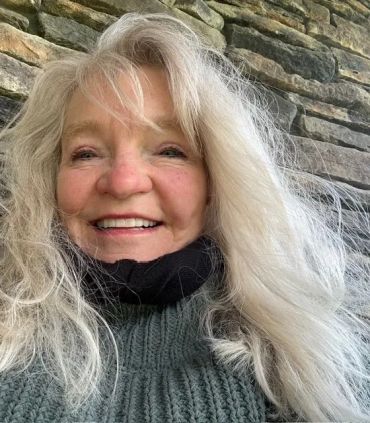
Today, I am a women's counselling therapist, specializing in trauma and working (mostly) with rural women. Rural women - a culture with unique experiences, perspectives, values and connection to the Land. As a rural woman myself, I cherish my life in Alberta's countryside. But, daily now, I witness climate impacts and ecological damage that pierce my heart.. Here, at ground zero, it's up close and personal. It's a planetary crisis.
So, yes, I know the anguish of climate change. The uncertainty, frustration, and anger. The horror, terror, and despair. And the sadness and grief and depression and anxiety. Accordingly, I'm reaching out to like-minded others.
And I can tell you first-hand that healthy connection helps!
MY HEART
As a concerned citizen and established trauma (and addictions) therapist, I am offering the healthy connection and appropriate therapy needed to navigate this climate trauma. I'm providing the support required to openly express concerns, locate resources, explore issues, heal wounds, and find the right path. And always, too, I am helping clients learn how to calm both their body and mind.
That is, I am offering climate-trauma therapy that helps frayed nervous systems - body-based (somatic) therapy. Body-based therapy for body-based trauma - appropriate support! It asks not what's wrong with you but what happened to you and listens to your body's knowing as well as your words. It is science-based and informative, gentle, and effective.
In fact, it's how I help to protect our living planet today - "one nervous system at a time." Because body-based therapy regulates our nervous system and heals our wounds (not just symptoms), it fosters lifelong change. Important! It also promotes wellbeing, healthy relationships, and resilience - and, therefore, a satisfied, connected, empowered, liberated, and resilient life.
LET US LIVE CONSCIOUSLY
BODY-MIND-SPIRIT
Critical, too, is a body-based lifestyle. Body-based living allows us to experience life as it's meant to be experienced - from an inner world of ease, calm, and self-awareness. Our nervous system is regulated; our personality balanced; our energy contained; and our brain online. We think clearly, choose thoughtfully, decide intentionally, and act deliberately. We are awake, aware, and engaged. We are "conscious!"
To live consciously is to live fully. It is to be aware and intentional - to live in the present, learn from the past, and create the best possible future. It's the secret to living our best life and the key to saving our one and only living planet. It's how I live my own precious life.
LET US MAKE CHANGE
BODY-MIND-SPIRIT-COMMUNITY
Indeed, I'm doing my very best to live consciously. And you can too! Our healthy planet requires our healthy selves.
In fact, a healthy body, mind, and spirit underlies healthy relationships, meaningful connections, sense of belonging, sense of ownership, community participation, and collective action - all foundational to community empowerment. Living consciously, we can support the hard work ahead of us. Living fully, we can step up to create a life-sustaining future. all live requires.
"Never doubt, " wrote cultural anthropologist Margaret Mead, "that a small group of thoughtful, committed citizens can change the world; indeed, it's the only thing that ever has." Right on! But let's add the word "healthy." so that it reads thus: "Never doubt that a small group of healthy, thoughtful, committed citizens can change the world."
LET US HONOUR A LAND ETHIC
BODY-MIND-SPIRIT-COMMUNITY-LAND ETHIC
What is community? To most of us, "community" conjures up a group of people with something in common - like a physical location, interests, concerns, values, or identity. Albertans concerned about wildfire compose a community, for example.. But community means more..
Community has a conservationist definition, too, In the battle for ecological sustainability. It is an ecological understanding of community. An ethical perspective of community. A moral code of conduct.. What is this definition of community? It is Aldo Leopold's Land Ethic.
According to Leopold’s Land Ethic, community includes not just people but the whole living world - soils and waters and plants and animals (“the Land”) - plus all interconnected relationships to boot. Together, we and the Land compose "community." Together, we belong to and associate in one very complex community - and, like all communities, what happens to one member impacts others.
In other words, a Land Ethic views people not as separate from the Land and the Land not as separate from people. To care for people requires caring for the Land and caring for the Land requires caring for people. It is our moral responsibility to care for our community, says the Land Ethic. And the Land Ethic provides us the moral guidelines..
LET US BE BRAVE
In short, a Land Ethic is the backbone of our sustainable future and our personal wellbeing is the foundation of individual and community empowerment. So let us be bold. Let us be brave!. Let us be all that we are to confront this unimaginable reality we're facing and to create a life-giving future.,
.PHOTO ABOVE
Four-year-old me with my family at the (now celebrated) Leopold Shack
Photo Credit - my dad Dr. Lloyd B. Keith
A BIT ABOUT CLIMATE TRAUMA
With unimaginable challenges bearing down, it's no wonder anxiety, depression, fear and sadness, anger and despair are on the upswing - even denial, the "fawn" of to the Fight-Flight-Freeze-Fawn survival response. These all are natural responses to stress and trauma. As a result, it's no surprise we're seeing more and more .relationship struggles, too, and communication problems, domestic violence, substance abuse, decision-making challenges, and life transitions.
It's not weird, no!
In fact, it's anything but weird. It's understandable. It's the understood impact of trauma on our nervous system. It's our body's natural and uncontrollable response to the horrific and overwhelming event called climate change.